Válasszon nyelvet


University of Pannonia, Multilingualism Doctoral School, Veszprém (Hungary)
Title of Course:
Language variation and change
Instructors:
Susan Gal* and István Csernicskó**
* Mae and Sidney G. Metzl Distinguished Service Professor: Departments of Anthropology and Linguistics, University of Chicago
** University of Pannonia and Ferenc Rákóczi II Transcarpathian College of Higher Education
Date of Course: November 24, 2023
Central European Time (CET): start: 16.00, end: 22.00
Eastern Time Zone (ET): start: 9:00 a.m., end: 3:00 p.m.
ONLINE
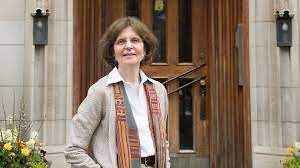
Susan Gal, University of Chicago (USA)
https://linguistics.uchicago.edu/people/susan-gal
COURSE OUTLINE
In recent decades, the study of language variation and change has itself changed significantly. The goal of this course is to introduce some of the new directions in American studies of variation. These approaches have implications for the understanding of sociocultural as well as linguistic change, which occur together. The course highlights new concepts and redefinitions of familiar ones. The definitions will be exemplified with empirical examples from our own research and that of colleagues, drawn from many cultural contexts, some from Europe and North America, but also from other continents. The range of examples clarifies the concepts and also raises questions about the role of cultural differences in linguistic variation and change. We will also highlight current controversies among researchers.
Concepts to be discussed: reflexivity, indexicality, enregisterment, interdiscursivity, differentiation, and voice. Language ideology, which has been part of the "tool kit" of sociolinguistics for 30 years, remains fundamental. I hope that lectures and the questions-and answer period can clarify and solidify your knowledge. Familiar concepts to be problematized: speech event, context, speaker, identity, language, and listening. Changes of many kinds will be discussed. For instance, standardization, resignification of linguistic forms, and creative recontextualizations as well as boundary-making.
In this tentative schedule of topics, please choose one among the readings for each session, so we have a shared background to discuss. Each of the four hour-and-a-half sessions will end with a Q&A period. (*=focus of discussion)
First session: FROM SOCIAL MOTIVATION TO INDEXICALITY
We start with a classic, William Labov's article about Martha's Vineyard, less famous than his NYC work. Here, Labov does not categorize speakers, but lets the speakers identify relevant aspects of their identities. Analyst can know this because speakers comment on their own speech, framing it in metalanguage (Roman Jakobson). This is an interpretivist approach to evidence via reflexivity (John Gumperz + Michael Silverstein) as signaled in contextualization cues and language ideologies. When indexicality defines the speech event, utterances index (presuppose, evoke and sometimes create) aspects of context in an unfolding process within Goffmanian participation frameworks. Choice of language or dialect establishes footing in multilingualism.
Recommended Reading:
Labov, W. 1963 Social motivation of a sound change. Word 19:3:273-309. https://www.tandfonline.com/doi/pdf/10.1080/00437956.1963.11659799
Gumperz, J. 1992 Contextualization+understanding. IN Goodwin+Duranti Rethinking Context. https://web.stanford.edu/~eckert/PDF/gumperz1992.pdf
*Goffman, 1979 E. Footing. Semiotica 25:1-27.
Second session: ENREGISTERMENT: STYLE, DIALECT, VOICE
There has been a lot of scholarly controversy around what exactly to call different kinds of linguistic variation and whether it is mainly linguistic or much more general: clothing, emotional mindset, spacetime. Gal (2018) summarizes these debates and the differences between varieties, codes, styles, or phonological and/or morpholexical alternates, genres, registers. Each of these terms picks out a different aspect of what is basically the same phenomenon. Register has become the most general term, for a (stereo)type of person and space/time. Enregisterment is the discursive and institutional formation of registers that happens through interdiscursivity. Registers are indexically invoked in interactions via Bakhtinian voicing. Speakers change registers in creative acts of voicing; long term changes in enregisterment change linguistic forms.
Recommended Reading:
Irvine, JT 1990 Enregistering affect. IN Lutz and Abu-Lughod (eds) The Politics of Emotion, 126–160.
*Gal, S. 2018 Sociolinguistic differentiation. IN N. Coupland (ed) Sociolinguistic Theory, 113–135. (In Hungarian /magyarul: Gal 2018: 101–126.)
Hill, J. 2000 Today there is no respect. IN Gal &Woolard Politics and Publics.
Woolard, K. 2011 Is there linguistic life after high school? Lg in Society 40:5:617-648.
Third session: PROCESS OF DIFFERENTIATION
Registers are formed by contrast. There are no communities with only a single register. Difference is fundamental to social life, meaning-making and to linguistic practices. Differentiation is regimented (constrained, controlled) by language ideologies, also called cultural ideologies. These are metacommunications, metasignals that may be explicit or implicit. Differentiation occurs through a number of semiotic processes that construct and proliferate difference, or simplify it. In addition to indexicality, these are: axes of differentiation, rhematization, fractal recursivity and erasure. The resignification of axes is a mode of change.
Recommended Reading:
*Gal, S. 2013 Tastes of talk. Anthropological Theory 13:1/2:31-48. (In Hungarian /magyarul: Gal 2018: 79–100.)
Gal, S and JT Irvine 2019 Signs of Difference. Chapter 4
Eckert, P. 2008. Variation and the indexical fields. J of Sociolinguistics. 12:4:453-76.
Fourth session: STANDARDIZATION AND THE MAKING of "LANGUAGES"
Standardization is a major form of sociolinguistic change. This session questions the commonsense definition of "language" and argues that most linguistic practices are not at all like the bounded, stable "language" that is imagined by language-protectors and standardizers. Hymes (1968) is a classic article about these inaccurate views of "language" in defining social groups. Agha and Gal show two different aspects of standard languages are how they are "made." Hanks documents a forced imposition of Spanish by colonial missionaries that seemed to maintain the boundary between two languages, while actually eliminating it. Rosa shows an inverse case in which Spanish and English in a 20th century Chicago school seem to have lost their boundaries, though partially maintained them.
Recommended Reading:
Hymes, D. 1968. Linguistic problems in the concept of "tribe." Proceedings of the 1967 AES.
*Gal, S 2006 Contradictions of standard lg in Europe. Soc Anthro 14:2:163-181. (In Hungarian /magyarul: Gal 2018: 55–78.)
Agha, A. 2003 The social life of cultural value. Lg and Communication 23:231-273.
Rosa, J. 2019 "Pink cheese, green ghosts, cool arrows." Inverted Spanglish. IN Looking like a language, sounding like a race.
Hanks, W. 2012 The birth of a language. J. of Anthropological Research 68:4:449.
Intézetünk docense, Dr. Pelczéder Katalin, nyelvész szakértő volt az Élő magyaróra legújabb adásában
Ómagyar kori nyelvemlékek címmel jelent meg az Élő magyaróra legújabb adása, melyet a Petőfi Kulturális Ügynökséggel Tihanyban forgattak, Dr. Pelczéder Katalin, intézetünk docense, volt benne a nyelvész szakértő. A videó a következő linken érhető el: Ómagyar kori nyelvemlékek - YouTube. A három nyelvemlékről (Tihanyi alapítólevél, Halotti beszéd és könyörgés, Ómagyar Mária-siralom) szóló anyag külön-külön is nézhető a csatornán, tanításhoz is jól használható elsősorban középiskolákban (ilyen céllal is készült).

Parapatics Andrea kollégánk egy hetet töltött a Ludwig-Maximilians-Universität meghívására Münchenben 2023 októberében, ahol a Finnugor/Uráli Tanulmányok Intézete kollégáival tárgyalt a két egyetem közötti jövőbeni együttműködési lehetőségekről. A Current topics in Uralic studies and linguistic tipology című blokkszeminárium keretében a nyelvjárási attitűdökkel kapcsolatos kutatási eredményeit is bemutatta az egyetem angol nyelvű nyelvtudományi doktori képzésében részt vevő hallgatók számára.
Featured
A Nyelvtudományi Kutatóközpont Lexikológiai Intézete meghívásos konferenciát szervezett 2023 októberében azzal a céllal, hogy lehetőséget teremtsen a hazai lexikológia és lexikográfiai különféle részterületeinek a találkozására, és az egyes területek kutatói közötti szakmai diskurzus elindítására. A kétnapos eseményen Parapatics Andrea kollégánk is előadást tartott Szótárhasználattal a nyelvi tudatosság fejlesztéséért címmel.